We are paid when readers call a provider through this site. That never changes our advice. How we make money
Quick answer
If you hear water running with every tap off, your water meter's leak dial is spinning, or water is pooling in the crawl space or along the foundation, a pipe under the house may have burst. Shut off the main water valve first, using a customer shutoff valve in the meter box, if yours has one, when the house valve is in the crawl space. Do not crawl into standing water near wiring. Once a plumber has fixed the pipe, the crawl space, the wet insulation and the floor framing all need to be dried, or mold follows.
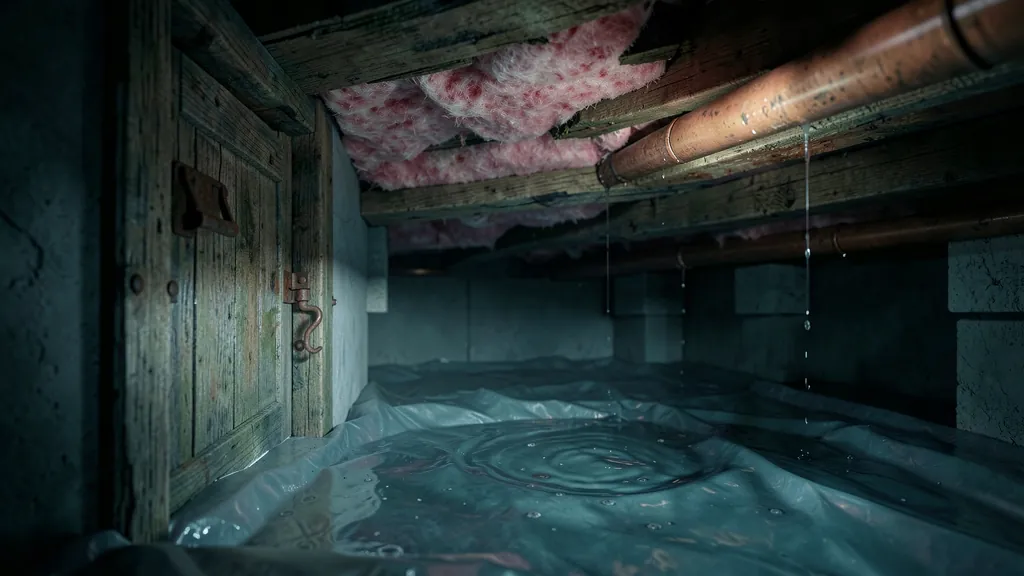
Do this first: shut the water off from outside the crawl space
- Find the main shutoff. It can be indoors or outdoors, usually in a basement, crawlspace or garage. [1]
- If the house valve is in the crawl space and the crawl space is flooded, check whether your meter box has a customer shutoff valve. Western Municipal Water District in California, for example, puts it in the meter box, usually near the street, between the meter and the pipe to your home, and says to turn the handle clockwise one-quarter until the water is off. [2] If you cannot find one, call your water utility.
- Confirm it is off by opening a faucet; the water should stop. [1]
- If water is near wiring or equipment under the house, turn the power off at the main breaker only if you can do it from a dry spot. Never stand in water to work a switch. If you would have to enter water to reach the panel, call an electrician to turn it off. [3]
- Call a plumber to find and repair the break.
- Photograph what you can see from the crawl space opening for your insurer, without going in.
Homes built on a concrete slab have no crawl space, and a leak under the floor shows up differently. If that is your house, see slab leak signs instead.
How you find out a pipe burst under the house
A burst under the house can run for hours before anyone sees water, because the crawl space hides it. These are the usual clues, and what each one tells you.
| What you notice | What it may mean | What to do |
|---|---|---|
| Sound of running water with every tap and appliance off | Water is escaping somewhere in the supply piping | Do the meter test, then shut the main |
| The meter's low-flow dial spins with everything off | A leak on your side of the meter | Close the house shutoff and look again |
| Dial stops after you close the house valve | The leak is inside the house plumbing | Shut it off and call a plumber |
| Dial keeps moving with the house valve closed | A leak in the service line between the meter and your valve | Call a plumber about the service line |
| Water pooling around the foundation in dry weather | Possible damaged underground pipes | Shut the main and check the crawl space from the opening |
| Damp, cold or soft spots in the floor; a new musty smell | Water and humidity under the floor framing | Check the crawl space and call for drying |
The meter test comes from Seattle-area water utilities: most meters have a low-flow indicator that spins even when only a little water passes through; if it moves with all water off, you have a leak; if it stops after you close the house shutoff, the leak is inside the house; if it keeps moving, the leak is in the service line between the meter and your shutoff. [1] Austin Water adds that standing water around the foundation could mean underground pipes are damaged, and that property owners are responsible for service lines past the meter and for internal plumbing. [4]
Before you crawl under: the safety checks
A crawl space is tight, dark and often wet, and it holds the house's wiring, ducts and sometimes gas appliances. A Department of Energy crawl space guide lists these as immediate health and safety issues in a crawl space evaluation: electrical, mechanical systems and carbon monoxide, mold and framing, asbestos, stored hazardous materials and radon. [5]
- Electricity: if there is exposed or damaged wiring, a qualified electrician may need to look first, and if there is a risk of shock or electrocution from faulty wiring, postpone the work until the issue is resolved and the space is safe. [5] Do not enter standing water near electrical equipment. [3]
- Gas: if you smell gas, do not turn on lights or do anything that could cause a spark; leave the house immediately and notify the gas company or the fire department. [6]
- Asbestos: old crawl spaces may have asbestos-based insulation wraps on ductwork and plumbing pipes. Do not disturb old pipe or duct wrap. [5]
- Animals: older crawl spaces can hold large amounts of animal droppings or dead animals. [5] Wear gloves, eye protection and an N-95 respirator if you go in. [7]
- Sewage: if the broken pipe is the sewer line or carries toilet waste, treat the water as Category 3 black water; water from a sink, washer or dishwasher drain is Category 2 gray water, and gray water left untreated for more than 48 hours may become Category 3. [8] Wear rubber boots, rubber gloves and goggles, and keep children and pets away. [9]
- Tell someone: have another adult at the opening while you are under the house.
Getting the water out and drying the crawl space
Standing water in a crawl space has to go, and its source has to be found and repaired; standing water usually means a leaking pipe above or groundwater coming in. [5] Once the plumber has fixed the pipe:
- Remove standing water with a wet/dry vacuum or an electric pump, once an electrician has determined it is safe to turn the power on. [6] Send it away from the foundation, not back into the crawl space.
- Pull down soaked insulation. Department of Energy repair guidance says to remove and discard fiberglass batt and cellulose insulation that has been soaked; rigid insulation can be washed off and kept. [10]
- Check the plastic ground cover. Gaps or open seams let ground moisture in and raise the humidity in the crawl space. [5]
- Move air and remove moisture with fans and a dehumidifier sized for the space. Some crawl spaces need a permanent dehumidifier to hold 30 to 50 percent humidity. [5]
- Measure the wood. DOE guidance says crawl space wood moisture content should stay below 17 percent, and anything higher should be investigated. [5]
- Replace the insulation and repair the ground cover only after the framing is dry. A crawl space vapor retarder should be at least 6 mil with seams overlapped by at least 12 inches. [11]
The drying plan for the floors and walls above, day by day, is in how to dry out a house after a pipe burst. Every basement and crawl space guide is in the basement water guide.
Mold under the floor: the risk after a crawl space leak
Wood and insulation that stay wet past 24 to 48 hours can grow mold. [12] In a crawl space, extra moisture can condense on the cooler surfaces of the wood framing and floor deck, which are vulnerable to fungal attack when moisture goes unchecked. [5] White growth on joists after a leak can be mold or a mineral deposit; how to tell, and what to do about it, is in white mold in a crawl space.
Frozen pipes under the house, and insurance
If the pipe froze before it burst, how you kept the house matters for your claim. Insurance usually covers burst pipes, including frozen pipes, if you heat your home properly. [13] An older sample Insurance Services Office homeowners form, posted by the Insurance Information Institute, excludes freezing damage unless you used reasonable care to maintain heat in the building, or shut off the water supply and drained the systems. [14]
- Report the damage to your insurer right away; the time you have varies by state. [15]
- Do not delay repairs. Washington's insurance regulator warns that insurance won't cover water damage if you delay repairs. [13]
- Keep receipts for all repairs and new items you buy, including the plumber's bill. [15] Keep rental receipts for pumps, fans and dehumidifiers too.
What the plumbing repair and the water damage usually cost is in burst pipe repair cost, and the first-hour steps for a burst inside the walls are in what to do when a pipe bursts in your house.
Common questions
What happens when a pipe bursts under your house?
Water fills the crawl space out of sight, soaks the insulation under the floor and raises the humidity around the framing. Standing water there usually means a leaking pipe above or groundwater coming in, and it has to be removed and the source repaired. [5] Wet wood and insulation can grow mold if they are not dried within 24 to 48 hours. [12]
How do I know if a pipe burst under my house?
Turn off every tap and appliance and watch the water meter's low-flow dial. If it spins, you have a leak; if it stops when you close the house shutoff, the leak is inside the house plumbing. [1] Standing water around the foundation can also mean damaged underground pipes. [4]
Is it safe to go into a wet crawl space?
Not until the electrical risk is handled. DOE guidance says that if there is a risk of shock or electrocution from faulty wiring, the inspection should wait until the issue is resolved and the space is safe. [5] Never enter standing water near electrical equipment. [3]
Does wet insulation under the house need to be replaced?
Soaked fiberglass batt and cellulose insulation should be removed and thrown away; rigid insulation can be washed off and kept. [10]
Sources
- Use Your Water Meter to Check for Leaks Saving Water Partnership (Seattle-area water utilities), accessed October 12, 2026
- How to Turn Off Your Water Western Municipal Water District (California), accessed October 12, 2026
- What to Do to Protect Yourself From Electrical Hazards Centers for Disease Control and Prevention, accessed October 13, 2026
- Water Leaks Austin Water (City of Austin, Texas), accessed October 13, 2026
- Guide to Closing and Conditioning Ventilated Crawlspaces (January 2013) U.S. Department of Energy, Building America Program (IBACOS, prepared for NREL), accessed October 13, 2026
- Safety Guidelines: Reentering Your Flooded Home Centers for Disease Control and Prevention, accessed October 12, 2026
- Flood Cleanup to Protect Indoor Air and Your Health (last updated March 18, 2026) U.S. Environmental Protection Agency, accessed October 13, 2026
- Water damage guidelines (follows IICRC S500) University of California, Riverside, Environmental Health & Safety, accessed October 12, 2026
- Guidelines for Cleaning Safely After a Disaster Centers for Disease Control and Prevention, accessed October 12, 2026
- Repairing Roofs and Ceilings: How To's for the Handy Homeowner (undated technical brief for Gulf States homeowners repairing storm damage) U.S. Department of Energy / Partnership for Advancing Technology in Housing (PATH), accessed October 13, 2026
- Install or Repair a Crawl Space Vapor Retarder, Weatherization Job Aid 16-1 (June 2024) U.S. Department of Energy, State & Community Energy Programs (NREL), accessed October 13, 2026
- A Brief Guide to Mold, Moisture and Your Home U.S. Environmental Protection Agency, accessed October 12, 2026
- Leaks, water damage and mold Washington State Office of the Insurance Commissioner, accessed October 12, 2026
- Homeowners 3, Special Form, HO 00 03 10 00 (sample ISO policy form posted by III) Insurance Information Institute (sample ISO form), accessed October 13, 2026
- What You Need to Know When Filing a Homeowners Claim (Consumer Insight, April 20, 2022) National Association of Insurance Commissioners, accessed October 13, 2026
How this page was made
This guide was drafted with AI writing tools, working from the sources listed on this page. A separate fact-checking pass opened every cited source and checked each number, threshold and instruction against it; anything a source did not support was rewritten or removed. Marcus L. Barber, the publisher, then read and approved the full page, including the text, questions and answers, title, search description and images before it was published. Images are AI-generated illustrations, not photos of real homes or people.
This page has not been reviewed by a licensed restoration contractor, industrial hygienist or insurance professional. See our editorial policy. Spot an error? Email partners@digitalsolomon.com.